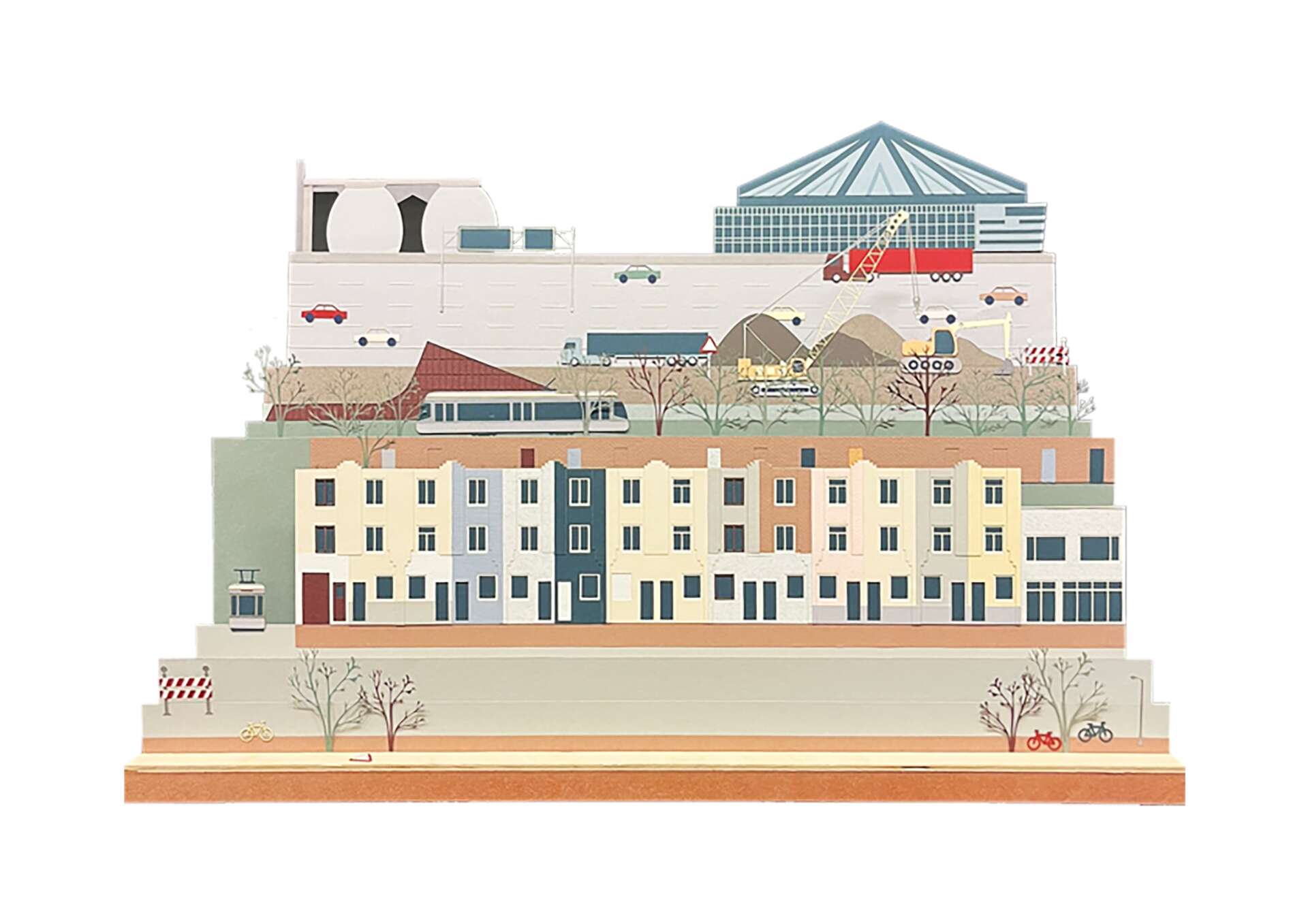
Assembling Authorship in Participatory Design The Ten Eekhovelei as a Collaborative Inquiry
Abstract
This paper explores the evolving notion of authorship in design-driven participatory action research, using the Ten Eekhovelei project in Deurne, Antwerp, as a case study. Conducted by scholars and students from the Interdisciplinary Studio for Territories in Transition (ISTT) at the University of Antwerp in collaboration with local residents and stakeholders, the project challenges traditional, singular models of authorship in architectural research. It employs co-design, participatory mapping, and narrative-building to integrate multiple voices, highlighting the power dynamics in knowledge production. Drawing on Sevgi Türkkan’s (2022) critique of individual authorship and Denicke-Polcher & Khonsari’s (2015) concept of “Live Projects”, the study illustrates how participatory design fosters collective authorship and shared authority. The research underscores the ethical and representational dimensions of authorship, advocating for fluid, inclusive, and dynamic approaches to architectural practice. The findings contribute to broader discussions on originality, ownership, and collaborative methodologies in contemporary urban research and design.
Keywords: assembling authorship, participatory design, collaborative inquiry