Improvisation in Urban Space Affordances, Commons, and Domestic Practices
Abstract
Contemporary urban development driven by industrial imperatives often fails to accommodate everyday life requirements, leaving gaps between public space design and users’ informal practices overflowed from their home. This study adopts authorship as a metaphorical concept to bridge the theories of affordance and urban commons, arguing that architects are the authors of original works while citizens create derivative or improvised works in response, thereby challenging the single-author model of space-making.
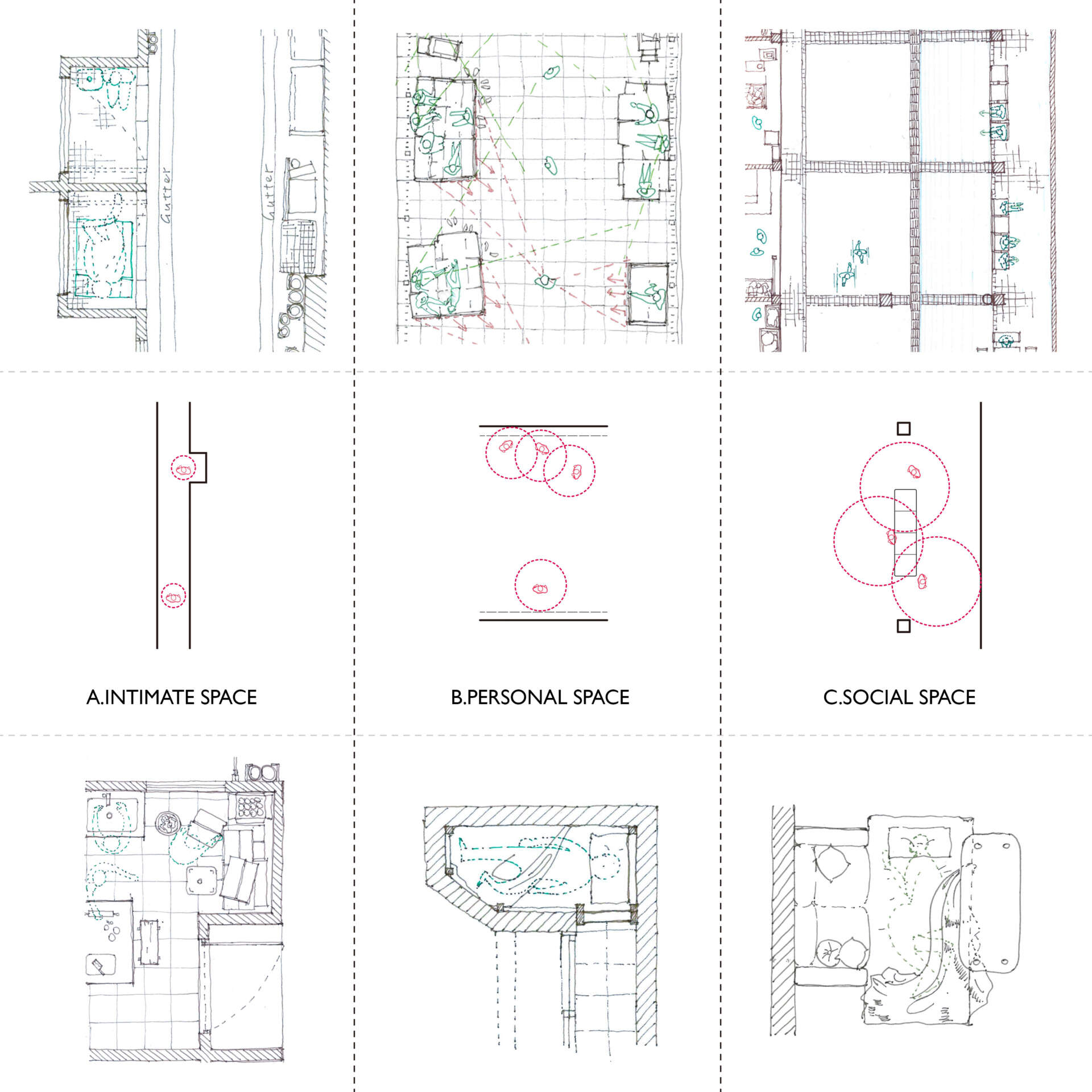
This study hires fieldworks and ethnographic drawings as a method for case studies, which documents how users appropriate and release the commons in public spaces through domestic practices. The purpose is to summarize the patterns or characteristics of domestic practices in achieving authorship from three aspects: experience, materiality, and governance, thereby contributing to new common laws for public space design.
Keywords: urban commons, affordance, domestic practices