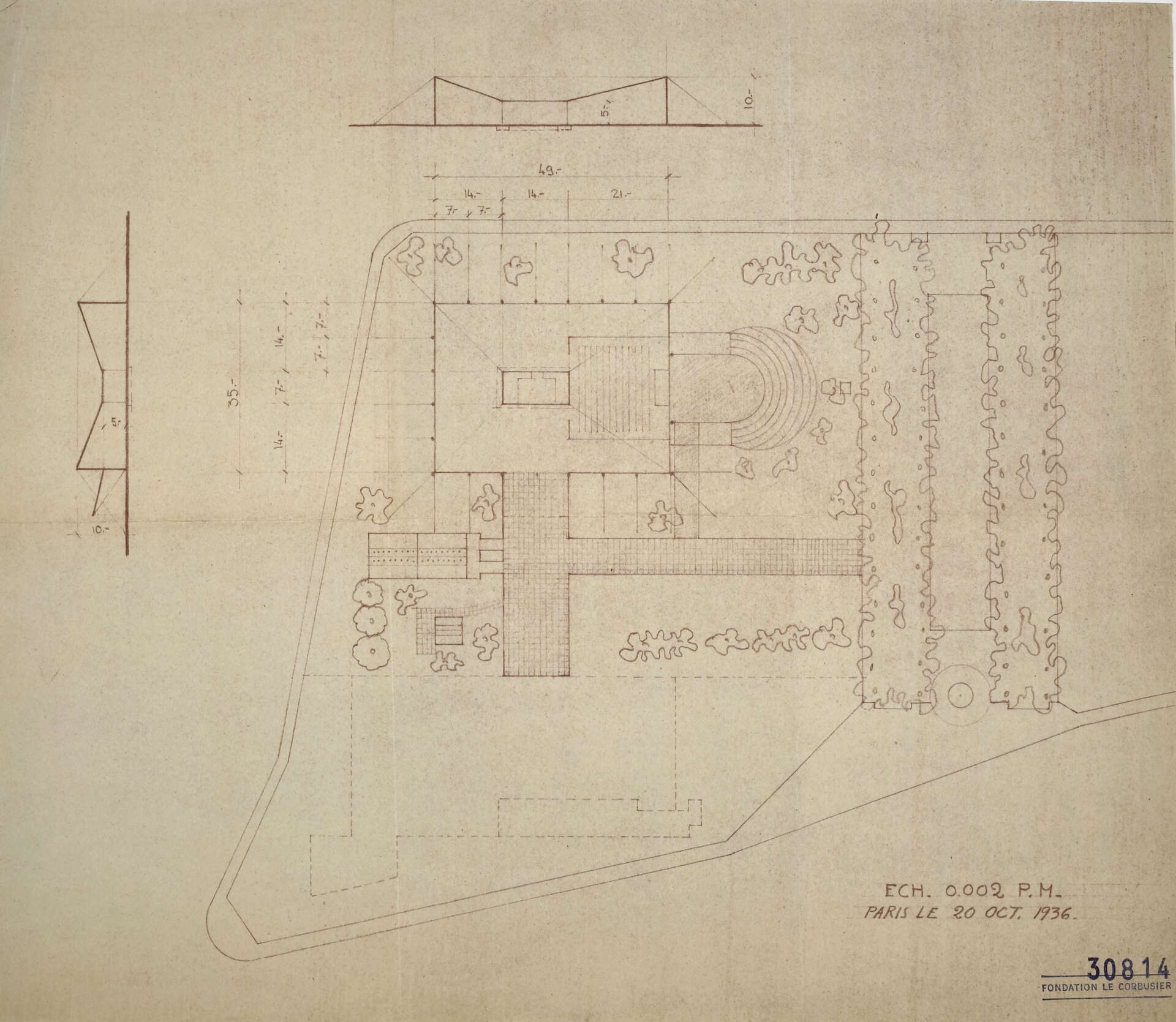
Authorship and Anonymity in the Pavillon Des Temps Nouveaux, 1937
Abstract
The Pavillon des Temps Nouveaux, inaugurated on July 17, 1937, as part of the Exposition Internationale des Arts et Techniques dans la Vie Moderne, embodies the ideals of modern architecture. Designed by Le Corbusier and Pierre Jeanneret, it featured a removable metal structure with sixteen inclined fusiform pillars supporting a suspended canvas, creating a flexible exhibition space. While often attributed solely to Le Corbusier, archival evidence reveals that Pierre Jeanneret played the central role in its design, with contributions from Charlotte Perriand. Jeanneret’s leadership is evident in early project proposals, developed during Le Corbusier’s absence. The pavilion also marks the onset of tensions between the cousins, leading to their eventual separation in 1940. Beyond its architectural significance, the project underscores the complexities of authorship in architecture, challenging the traditional focus on singular genius and highlighting the essential role of collaboration in modern design.
Keywords: Pierre Jeanneret, Le Corbusier, Pavillon des Temps Nouveaux